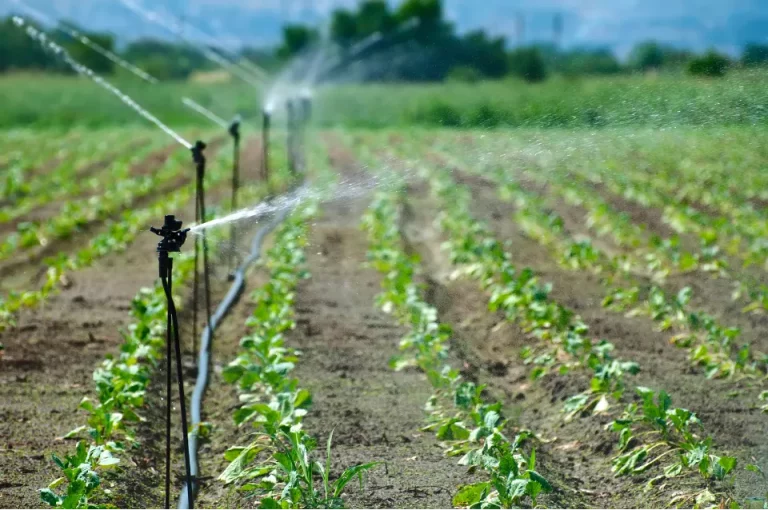
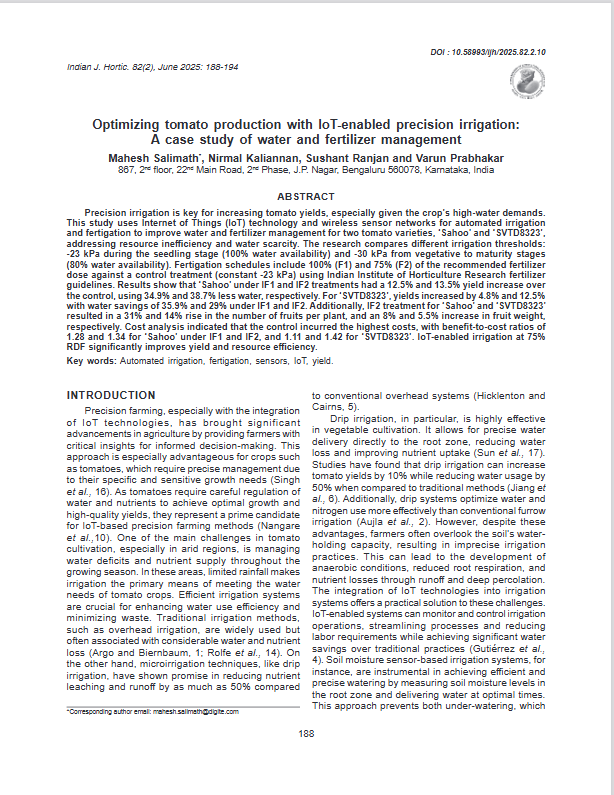
If you’re a farmer or having a farm while you are working elsewhere, you’ve probably felt the pressure of rising input costs, erratic rainfall, and labor shortages. In this scenario, installing irrigation automation systems is one of the smartest moves you can make. It’s not just a fancy technology upgrade. It is a practical investment that saves water, costs while boosting your yields.
In this blog, we’ll walk you through why automating your irrigation matters, what to keep in mind before installation and how to design an irrigation automation system that truly caters to you for farming needs.
Why Irrigation Automation?
Water is the lifeline of every farm. Even with the best seeds and fertilizers, crops will struggle without the right amount of water at the right time. Too much causes root damage and nutrient loss, while too little leaves plants stressed and weak.
That is why irrigation plays such a central role in farming. It is not just about turning on a pump and flooding the field. It is about delivering the right amount of water in the right way so your crops stay healthy and productive. Good irrigation improves soil health, makes fertilizers work better, and directly impacts your profitability.
But here is the challenge: Manual irrigation can be time-consuming, inconsistent, and inefficient especially if you’re managing a large farm or growing multiple crops. This is where automated irrigation and fertigation systems come in.
Here’s why more progressive farmers are switching to automation:
- Water efficiency: Automation ensures crops get just the right amount of water, reducing wastage.
- Time-saving: You no longer need to run around to manually switch on your pumps or open your valves.
- Consistent irrigation: With sensors and timers, water delivery stays uniform across the field.
- Data-driven decisions: Irrigation automation systems come with intuitive mobile control and dashboards that give real-time insights into soil moisture, weather and water usage.
In short, smart irrigation systems take the guesswork out of farming and helps you achieve more with fewer resources.
Prerequisites for Installing an Irrigation Automation System
Before you begin implementing irrigation automation systems at your farm, there are a few boxes you’ll want to tick:
- Water Source: Make sure you have a reliable and sufficient water source, whether it is a borewell, farm pond, or storage tank.
- Power Supply: Automated systems rely on power for sensors, controllers, and pumps. Solar options are also available for off-grid areas.
- Farm Layout Mapping: Understand your field’s layout. A clear idea of your crop pattern, soil type, and field size helps in planning where to place pipes, valves, and sensors.
- Soil and Crop Types: Different crops need different watering schedules. Similarly, sandy soils drain faster than clay soils. Your irrigation setup should match the needs of your land.
- Connectivity: Smart irrigation often involves IoT (Internet of Things) devices. Good internet or mobile network coverage helps you monitor and control the system remotely.
- Irrigation system: Decide whether you will use drip, sprinkler, or micro-irrigation based on your crops, soil type, and field layout. The system you choose will determine how valves, pipes, and sensors are installed.
- Budget: The cost of implementing a smart and reliable irrigation automation system varies depending on the use case and complexity. Typically, the simplest systems start from around Rs. 15,000 and can go up to several lakhs. With government subsidies and support, automation is becoming increasingly affordable.
How Can You Design an Automatic Irrigation System for Your Farm?
Designing an automated irrigation system may sound complicated, but it becomes manageable if you break it down step by step. Start by mapping your field and understanding the crop types, soil condition, and water requirements. Decide on the type of system that suits your farm best, such as drip irrigation, sprinkler systems, or a combination of both.
Next, plan the placement of pumps, pipes, valves, and sensors to ensure every part of your field gets the right amount of water. Key components include soil moisture sensors, weather based controllers, and valves that open and close automatically. These components work together, communicating in real time to deliver water only when your crops actually need it.
For farms that already have irrigation systems in place, the design focuses on optimizing the existing layout to make it more efficient. For new farms, it is about creating a complete system from scratch that delivers maximum results with minimum effort.
This is where we can help. Our technical team can guide you through the entire process, whether it is designing a system for a new farm or improving the layout of an existing irrigation setup. With expert support, you can make sure your system is both effective and tailored to your farm’s unique needs.
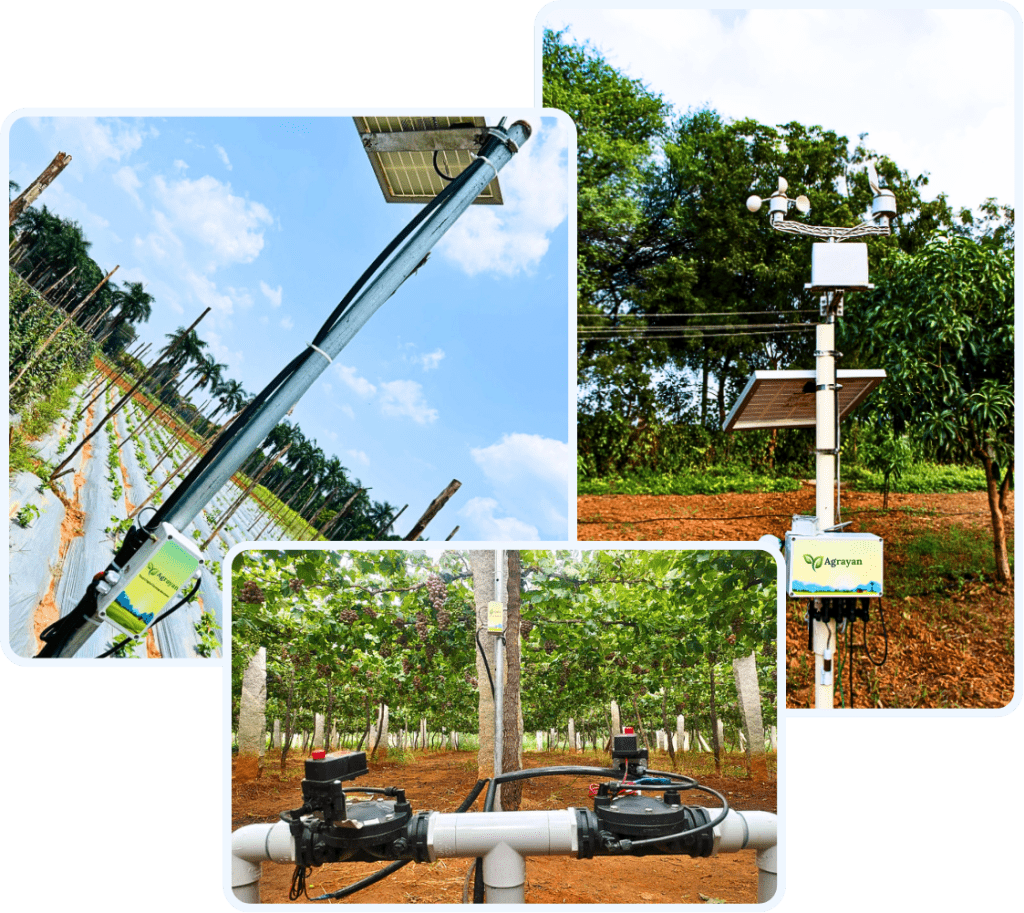
If you are exploring irrigation automation, tools like Agrayan smart farming solutions can make life easier. These systems combine soil moisture sensors, timers, and automatic pump starters so your crops get the right amount of water without constant supervision.
Agrayan can help you:
- Assess your farm’s irrigation needs
- Design custom smart irrigation systems
- Install and maintain sensors, automation systems, valves, controllers, and software
- Train you to monitor, control, and manage the system
You can monitor and control everything from a mobile app or web dashboard, which is especially useful if you are managing the farm while working elsewhere. With Agrayan, you are not just installing equipment, you are adopting a smarter way to farm. The system works with real-time data, AI-powered dashboards, and on-the-ground support to ensure your crops get the care they need automatically.
It is not about replacing the farmer. It is about making irrigation smarter, more consistent, and much less stressful.
A Step Toward Profitable Agriculture
Automating your irrigation system can save water, boost yields, and give you more time to focus on your farm. But success depends on thoughtful planning and the right technology partner. Whether you’re just starting or looking to upgrade your existing system, Agrayan is here to help you every step of the way.
Want to know more about smart irrigation systems for Indian farms? Reach out to us. Let’s grow smarter, together!
Have any questions?
Contact us to learn more about Agrayan Conversational Agriculture Solutions.